
6 Min Read
NJJA To Host a Women’s Self-Defense Seminar on April 11 2026
Summary
The Women’s Self-Defense seminar, scheduled for April 11, 2026, focuses on Maslow’s Hierarchy of Needs, establishing physical safety as the essential foundation for women’s self-actualization.
Nairobi Jiu-Jitsu Academy joins forces with SheDefense and Kombat Brigade to provide technical, life-saving training.
Three practitioners—Sarah, Celine, and Ajmeet—share how combat sports helped them overcome phobias, find their voices, and maintain life balance.
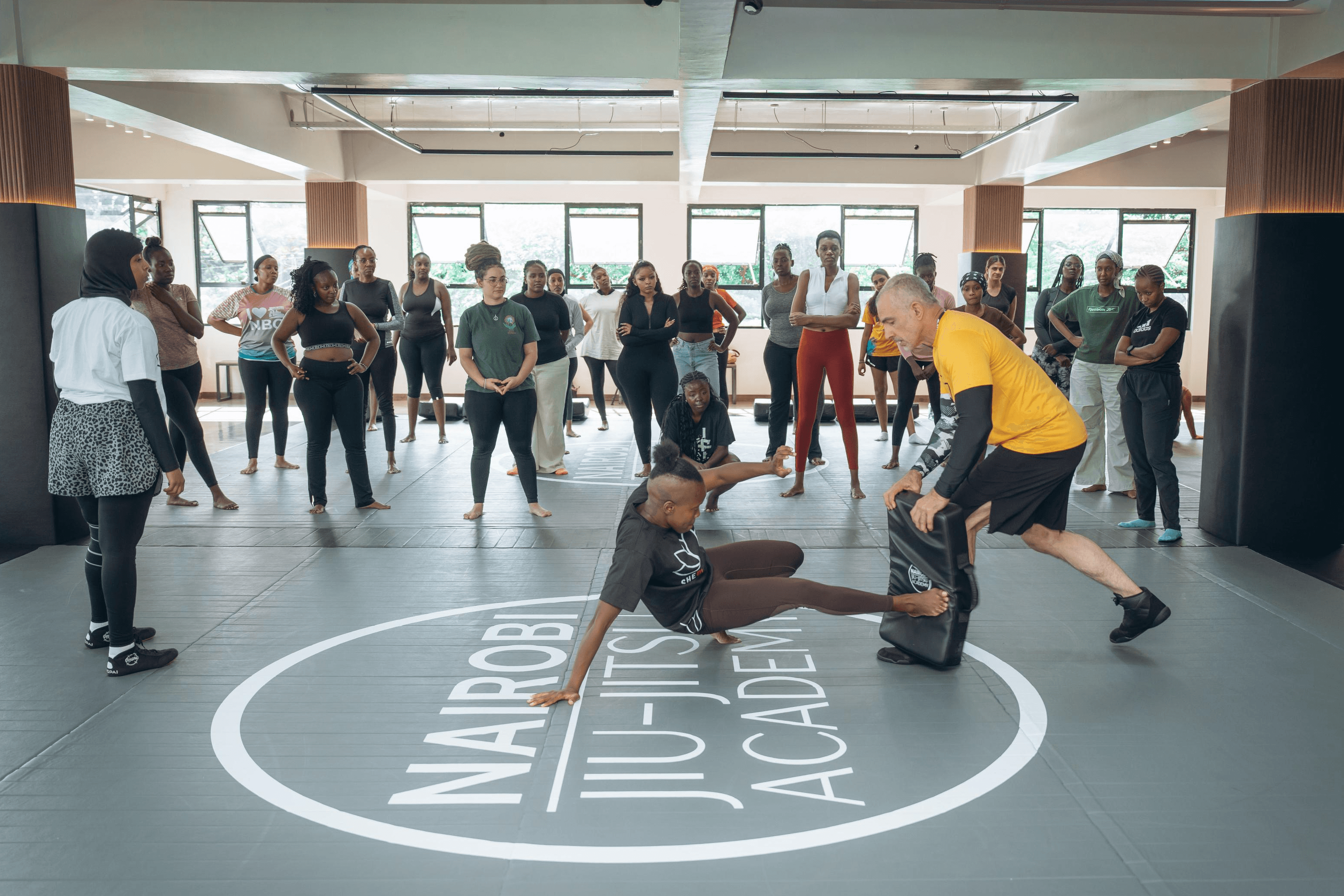
Nairobi Jiu-Jitsu Academy is set to host a specialized Women’s Self-Defense Seminar on Saturday, April 11, 2026, aimed at providing women with the technical tools to become their own first responders.
In collaboration with SheDefense and Kombat Brigade, the event (entry: 1,000 Ksh) seeks to dismantle the stigma surrounding violence and combat sports.
For co-founder Tomas, the mission is psychological: by securing the safety layer of Maslow’s Hierarchy of Needs, women are empowered to pursue higher ambitions like self-esteem and self-actualization without the paralyzing "freeze" response often relied upon by attackers.
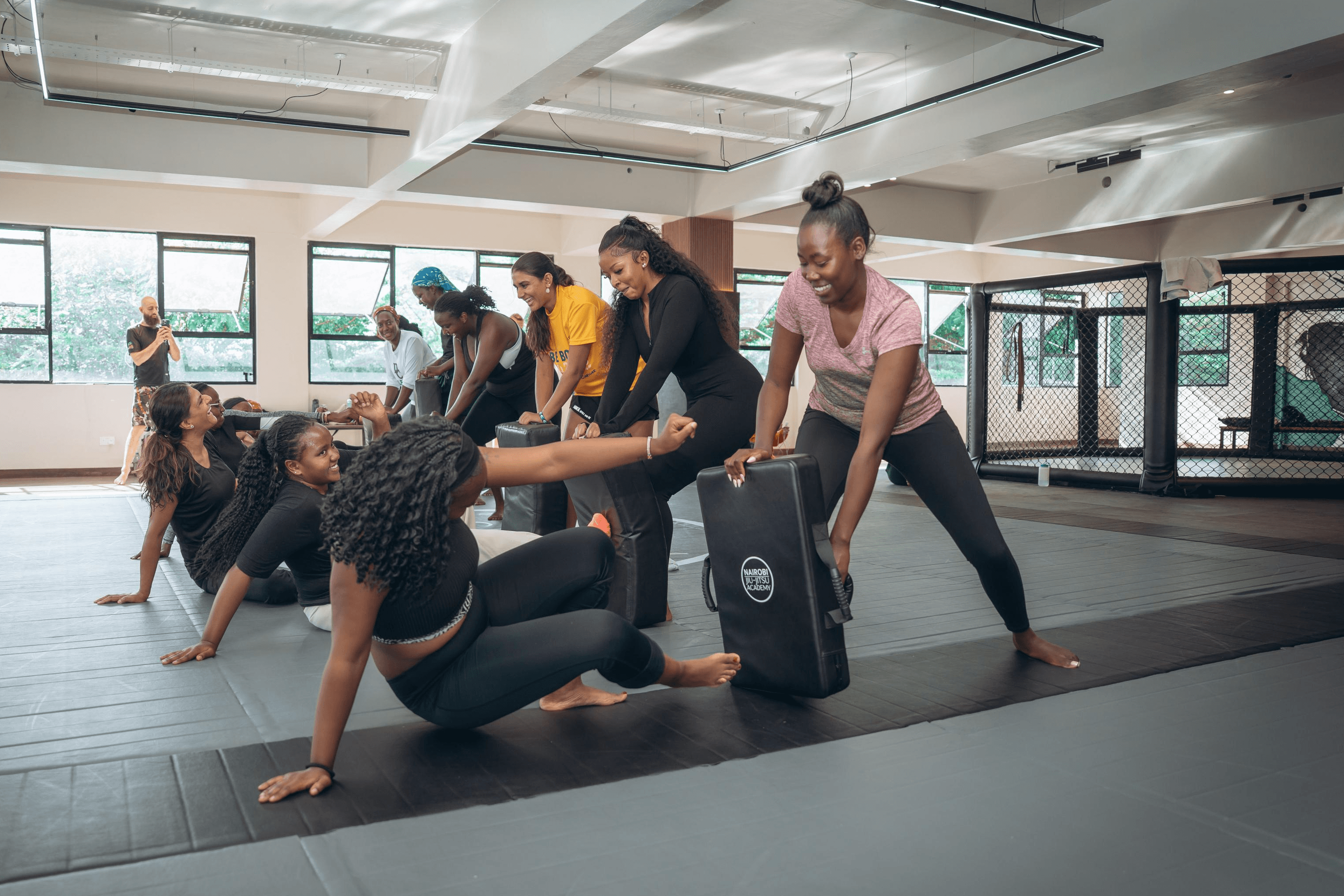
The April 11 Seminar
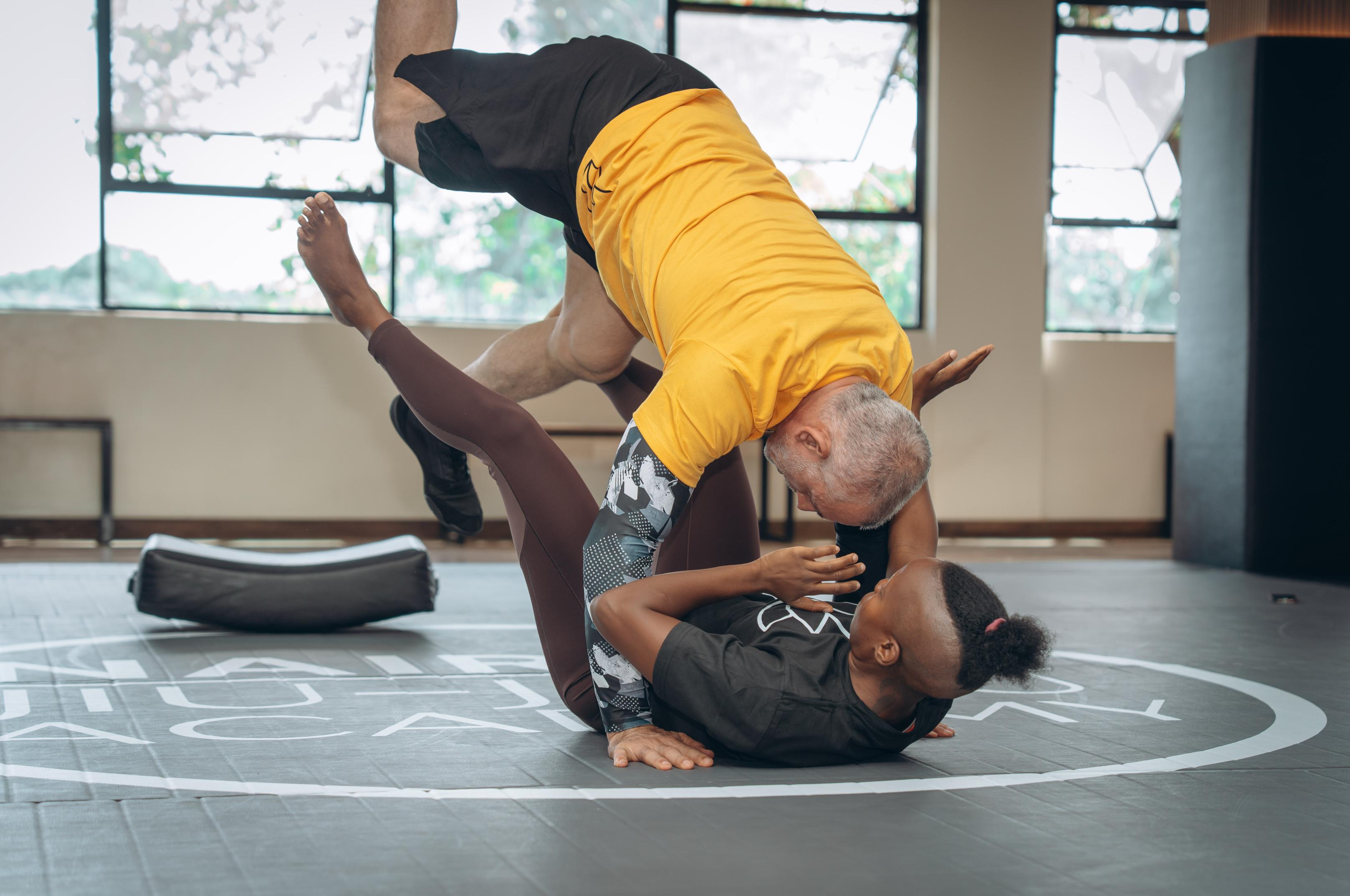
Nairobi Jiu-Jitsu Academy is preparing to host a specialized Women’s Self-Defense Seminar on Saturday, April 11, 2026.
In collaboration with SheDefense and Kombat Brigade, the event (entry: 1,000 Ksh) is designed to dismantle the "stigma of violence" that often keeps women away from combat sports.
For Nairobi Jiu-Jitsu Academy co-founder Tomas, the mission of this seminar is rooted in a fundamental psychological truth: Maslow’s Hierarchy of Needs.
To understand why self-defense is the ultimate tool for empowerment, one must look at how humans prioritize growth.
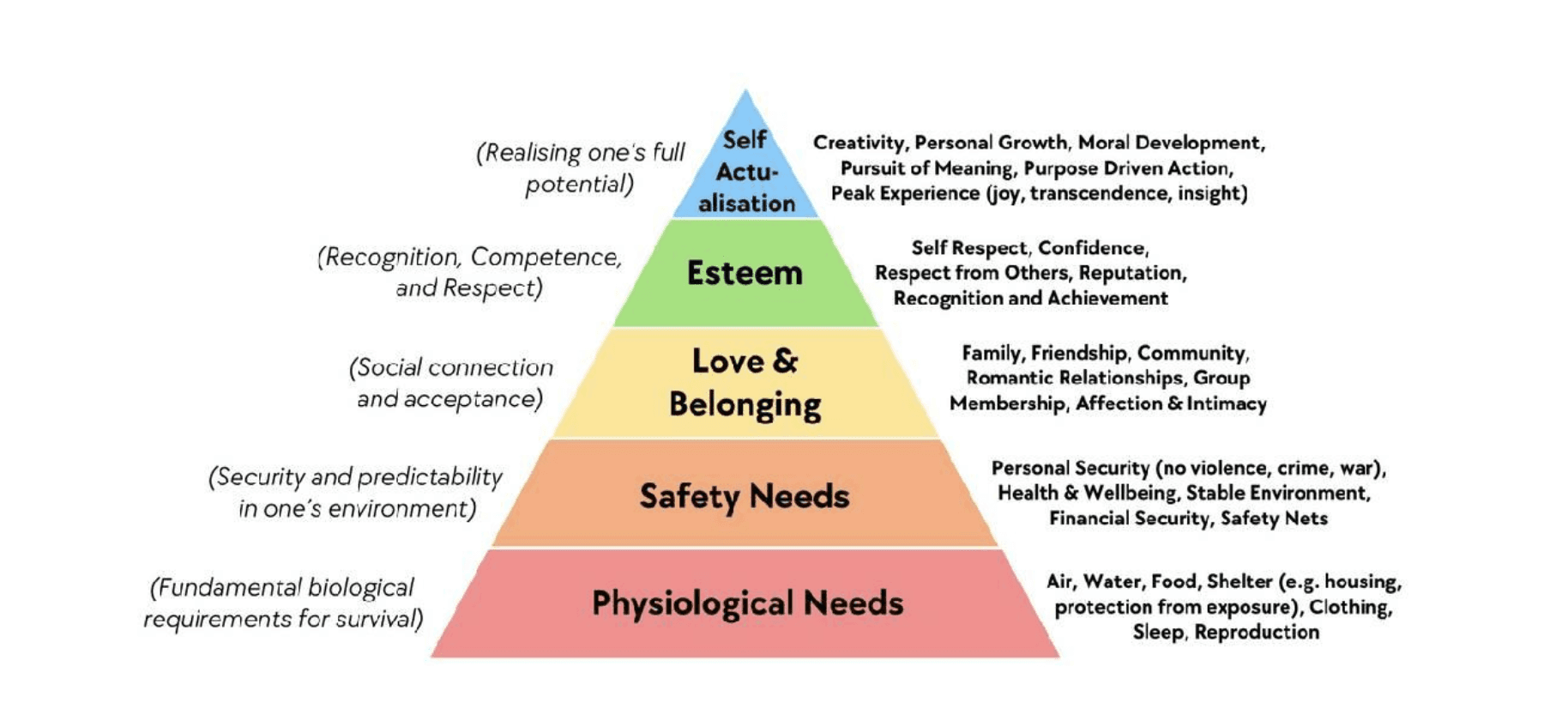
At the base of the pyramid are physiological needs, followed immediately by safety and security.
Tomas argues that if a woman does not feel safe—whether walking the streets or navigating a "creep" at the office—she cannot effectively move up the pyramid to achieve a sense of belonging, self-esteem, or "self-actualization" (reaching her full potential).
By providing technical training, the seminar aims to secure that foundational "safety" layer.
"Most sexual assaults happen in silence", Tomas notes, explaining that attackers rely on a victim's "freeze" response.
When a woman learns to defend herself, she isn't just learning to fight; she is securing the foundation of her life so she can pursue her higher ambitions without fear.
This isn't just a one-off class.
Recognizing that true security requires muscle memory, Nairobi Jiu-Jitsu Academy is launching an intensive follow-up course after the seminar.
The goal is to build a "tribe" of women who act as their own first responders—possessing the technical confidence to recognize, de-escalate, or neutralize a threat before it compromises their peace of mind.
But how does a technical sport actually change a person's life?
To find out, I sat down with three women at Nairobi Jiu-Jitsu Academy—Celine, Sarah, an Ajmeet.
Their stories move beyond the "how-to" of self-defense and into the "why" of a total lifestyle transformation.
They reveal a world where the sport is used to cure phobias, build vocal confidence, and navigate the complexities of life.
Sarah Hussein: Finding a Voice on the Mats
When Sarah Hussein first stepped into the world of martial arts, she wasn't looking to break into a "man’s world"—she was simply looking for a challenge.
Her journey didn’t start on the grappling mats of Nairobi Jiu-Jitsu Academy, but in a women’s-only boxing class.
By the time she transitioned to Jiu-Jitsu, she had already spent four years absorbing the disciplines of Taekwondo, Karate, and Muay Thai.
Despite her extensive background, the shift to a male-dominated grappling environment brought a unique set of hurdles.
"It was intimidating at first," Sarah admits.
The close-contact nature of the sport, coupled with being the only woman in the room, created a sense of discomfort that many newcomers face.
However, she quickly discovered that the mats are a great equalizer.
"I met the most amazing people, " she says.
"You meet people from all walks of life on the mats, and they are typically the most welcoming, kind people."
Through time and consistent training, that initial intimidation evaporated.
Today, Sarah walks into any gym in the world with a sense of belonging that few other sports can provide.
The transformation, however, has been more mental than physical.
Sarah describes herself as a "completely different person" than the one who started this journey.
The mats served as a training ground for her voice.
"I have learned to speak up for myself, and I’ve learned to take my place even if I’m the only woman in the room," she explains.
This shift in confidence—learning to accept guidance from veterans and offer it to novices—has reshaped how she carries herself in her daily life and in a new country.
For Sarah, the camaraderie and the technical mastery of Jiu-Jitsu are gifts that shouldn't be reserved for only one gender.
She has become a vocal advocate for more women to join the "tribe," noting that it is unfortunate for "half the human race" to miss out on the mental and physical health benefits the sport provides.
As Sarah prepares for the next stage of her journey—competition—her story serves as a powerful testament to what the April 11 Women’s Self-Defense Seminar is truly about.
It isn’t just about learning to escape a hold; it’s about the transformative power of "taking your place."
Just as Sarah traded her initial discomfort for a voice that commands respect, the upcoming seminar at Nairobi Jiu-Jitsu Academy offers every woman in Nairobi the chance to stop being a spectator and start being their own first responder.
Celine Wele: Overcoming Fear Through Technique
For Celine Wele, the journey into martial arts was never about seeking violence; it was about seeking a sense of command in an unpredictable world.
Her journey began a decade ago on campus, during a time when women were frequently harassed over their choice of clothing.
Faced with the options of swimming or basketball, Celine chose Tong-IL Moo Do—a decision driven by a need to feel in control of her own safety and her own body.
Transitioning into the high-pressure world of Jiu-Jitsu at Nairobi Jiu-Jitsu Academy provided a unique challenge that went beyond physical fitness.
Celine, who admits to being claustrophobic, found that the mats offered a radical form of "exposure therapy."
"Having someone on top of me and I can’t get out should be my worst nightmare," Celine explains.
"But Jiu-Jitsu gets you thinking without the box actually. It gives my brain a way to escape—it helps me realize there is always a way out; I just need to figure it out."
This mental shift has allowed her to trade anxiety for calculated problem-solving, turning a phobia into a source of strength.
Training in a male-dominated space doesn’t faze her.
Having often been the only woman on the team since her early days, she has learned to focus
on the work rather than the gender of her partner.
She credits the men at Nairobi Jiu-Jitsu Academy for their technical awareness, noting that they
recognize the energy differences and adjust their drills to ensure progress for everyone.
The transformation in Celine’s character is undeniable.
She describes her former self as a shy girl hidden away in a corner with earphones on.
Today, she walks the streets with a presence that is impossible to ignore.
"It’s not the confidence that I can beat you up", she says. "But that type of confidence that says she’s not timid and you can’t take advantage of her."
As a woman who works in a male-dominated industry and trains in a male-dominated sport, Celine’s message to other women is urgent and direct.
She views the April 11 Women’s Self-Defense seminar as a critical opportunity for women to become their own first responders.
"If you have once felt powerless in this world, then you are not alone," Celine says.
"It’s time to take your power back. There is no one out there to save us; we are our own security.
When things get difficult, we need to be ready to help ourselves. The beauty of Jiu-Jitsu is that it teaches you the simple techniques to do exactly that."
Ajmeet Bharaj: Strength and Balance at Any Age
While many view combat sports as a young person's game, Ajmeet Bharaj is living proof that the mats at Nairobi Jiu-Jitsu Academy offer a lifelong sanctuary.
A 48-year-old graphic designer and Muay Thai coach, Ajmeet didn’t start her martial arts journey in her teens or early twenties.
She began in her 30s, proving that it is never too late to reinvent your physical and mental boundaries.
For Ajmeet, the "human chess" of Jiu-Jitsu and the discipline of Muay Thai are far more tha just hobbyist pursuits—they are essential tools for navigating the complexities of a woman’s life.
She credits the sport with fixing her health, restoring her life balance, and anchoring her mental and spiritual well-being.
"These are skills that need repetition and consistency," Ajmeet explains.
She views combat sports as a vital ally for women as they move through different biological stages.
Whether navigating the high energy of their 20s or the hormonal shifts of menopause, the mats provide a grounding force.
By training at Nairobi Jiu-Jitsu Academy, women learn to manage their bodies with a level of awareness that translates into every other aspect of their existence.
Beyond the individual, Ajmeet sees the discipline as a "stepping stone" for the roles women play outside the gym.
The patience, resilience, and strategic thinking required to survive a difficult round on the mats are the same qualities needed for successful parenting and a strong marriage.
It is a form of character-building that radiates from the academy into the household.
As the April 11 Women’s Self-Defense Seminar approaches, Ajmeet’s story stands as a beacon for women who feel they might have "missed the boat" on martial arts.
Her presence at Nairobi Jiu-Jitsu Academy reinforces the idea that the gym is a professional, safe, and inclusive space for women of all ages and backgrounds.
"It’s a lifestyle, not a one-time event, " she says.
For the women of Nairobi, Ajmeet’s journey is a reminder that taking your power back isn't just about a single moment of defense—it’s about building a foundation of strength that lasts a lifetime.
The Next Generation
While Nairobi Jiu-Jitsu Academy offers a blueprint for lifestyle, 15-year-old Patricia Ambuso represents the sport’s elite future.
A standout from Kibera and the MMA Gold scholarship program, Patricia proves that discipline—not background—dictates potential.
Training alongside both boys and girls, she is following the path of Kenyan trailblazer Felista Mugo, the first regional woman signed to the PFL.
For those attending the April 11 Women’s Self-Defense Seminar, Patricia is a living reminder: the journey may start with safety, but it can lead to mastery.
At Nairobi Jiu-Jitsu Academy, the "tribe" supports every woman’s transition from a student of survival to a world-class athlete.