Dennis Nyingi
4 Min Read

Why Does Jiu Jitsu Feel So Hard?
You walked into Jiu Jitsu thinking you were reasonably fit.
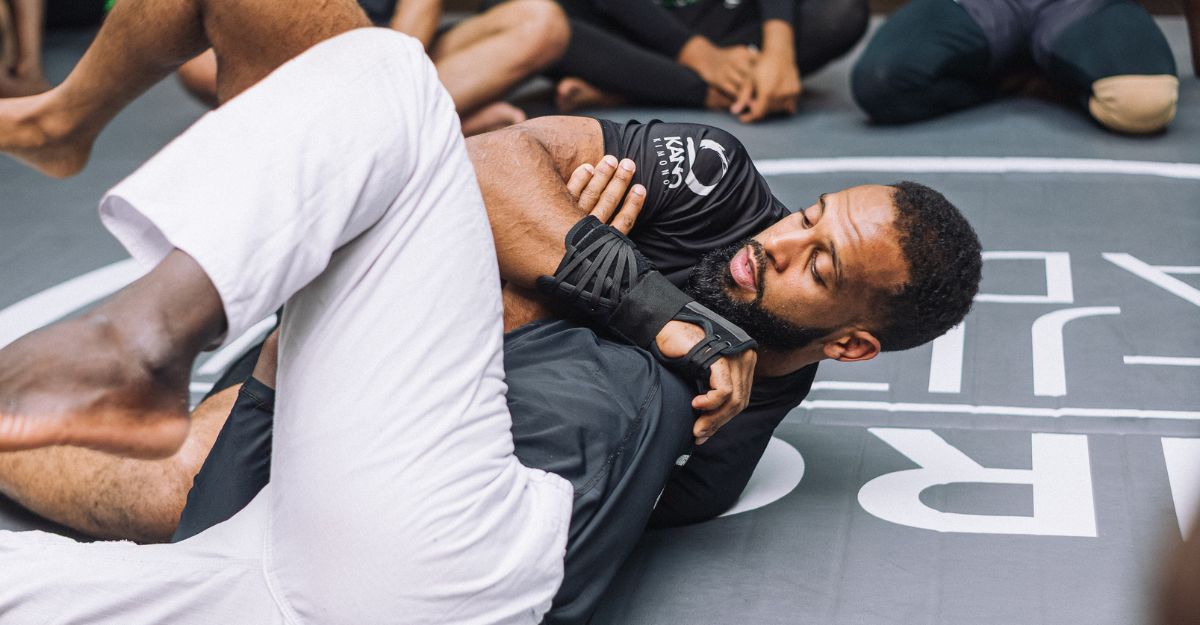
An hour later, you're lying on the mat wondering how someone half your size just made you feel completely helpless.
Your forearms are on fire, your breathing is all over the place, and you have absolutely no idea what your legs are supposed to be doing.
You vaguely remember learning an escape five minutes ago, but under pressure your brain has apparently decided that information is no longer relevant.
Then you look around the room.
Everyone else seems to know what they're doing.
What the hell did you sign up for?
If you've ever felt like this, welcome to Jiu Jitsu.
And more importantly: Nothing is wrong with you.
You're not bad at Jiu Jitsu.
You're new to it.
There's a difference.
Jiu-jitsu has an enormous learning curve because you're not just learning techniques.
You're learning how to use your body in positions that are completely unfamiliar while someone else is actively trying to prevent you from doing exactly what you want.
That's a lot to process.
And when you're new, every position feels like a problem that needs solving immediately.
You're trying to remember where your hands should go, where your feet should be, what your coach said five minutes ago, and why the person on top of you suddenly feels like they weigh three times as much.
You're trying to think about everything.
And that's part of the problem.

Jiu-jitsu eventually becomes less about remembering every individual movement and more about recognizing what is happening in front of you.
But that takes time.
At first, everything is conscious.
Eventually, some of it becomes instinct.
That's why someone who's been training for years can look ridiculously calm in a position that makes a beginner feel like they're fighting for their life.
They're not necessarily stronger.
They've just seen the problem before.
You're also probably using way too much energy.
Beginners have a tendency to fight everything.
Every grip.
Every movement.
Every inch of space.
Someone grabs your arm, and you immediately decide that arm is now the most important thing in the universe.
Someone passes your guard, and suddenly you're trying to bench press a human being.
You get mounted, and your entire nervous system files a formal complaint.
It's exhausting.
With time, you start learning that not every problem needs to be solved with maximum effort.
Sometimes you need to move.
Sometimes you need to create space.
Sometimes you need to wait.
Sometimes you need to stop fighting the wrong thing.
And that brings us to another frustrating part of learning Jiu Jitsu.
You're often solving the wrong problem.
You might think your problem is that someone is holding you down.
But maybe the real problem is that your hips are completely flat.
You might think you need to push harder.
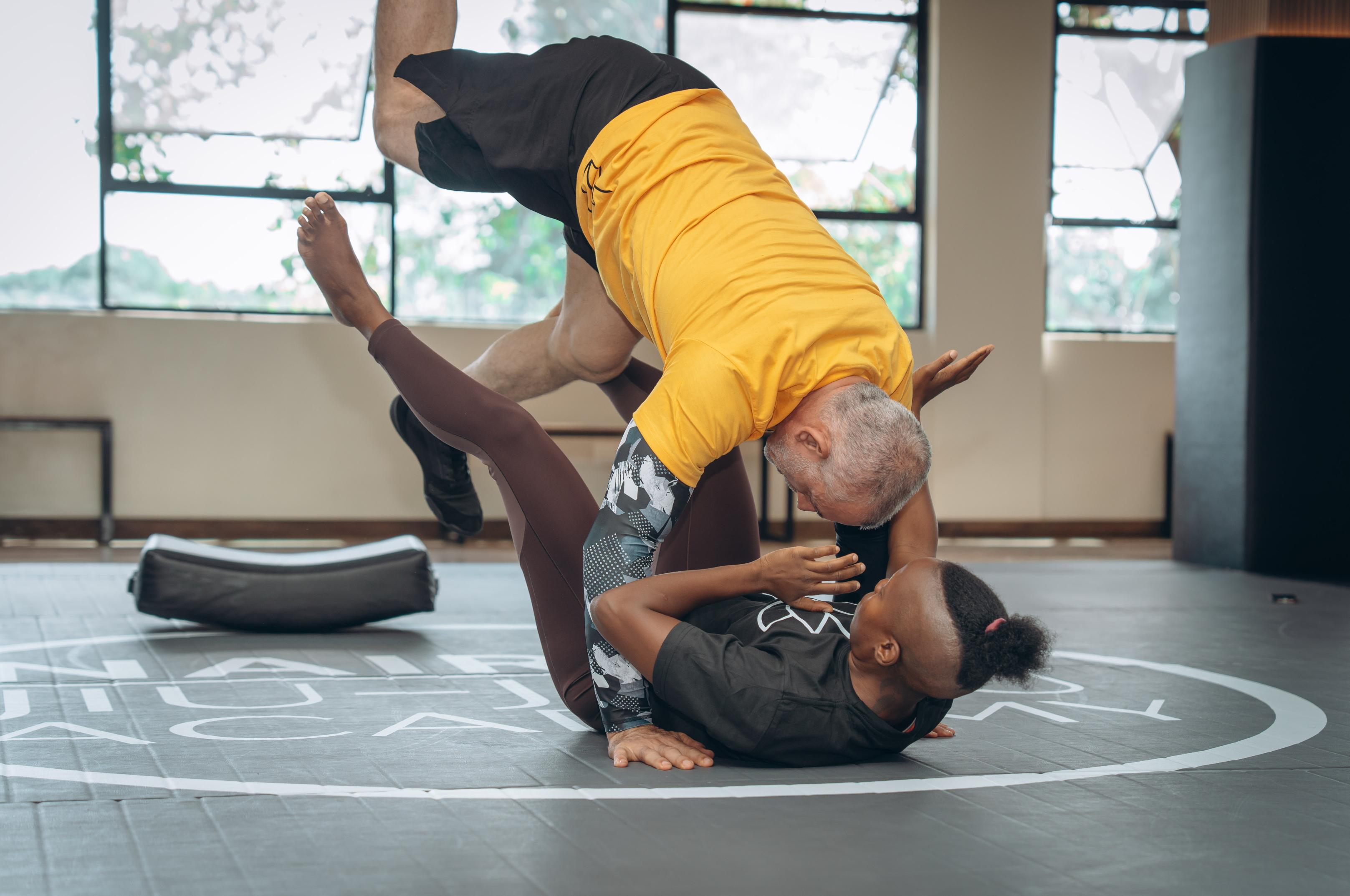
Maybe you actually need to create a frame.
You might think you need to escape immediately.
Maybe you first need to stop them from improving their position.
These little distinctions are what eventually start making Jiu Jitsu make sense.
But you can't rush them.
You have to experience the positions.
And yes, that means getting smashed.
A lot.
Getting smashed is part of the education.
Sometimes the fastest way to understand why an escape works is to spend five minutes discovering what happens when you don't have one.
Jiu Jitsu has a funny way of teaching you humility.
You can walk into class feeling strong, athletic and confident.
Then someone quietly puts you in mount and spends four minutes making you reconsider every decision that led you there.
It's humbling.
But it's also information.
And then there is the catch up problem.
You might train for three months and feel like you're making no progress.
Then one day, you find yourself in a position that used to terrify you and suddenly you know what to do.
You frame.
You move your hips.
You recover your guard.
And afterwards you think: Wait... I actually knew what I was doing.
Those moments are easy to miss because progress in Jiu Jitsu rarely feels dramatic while it's happening.
Most of the time, you're just showing up.
Getting confused.
Getting smashed.
Learning something.
Forgetting it.
Learning it again.
And slowly, almost without noticing, your brain starts building a map.
So how long does it take?
That's the question everyone wants answered.
When will I be good?
When will I stop getting destroyed?
When will I finally feel like I know what I'm doing?
The annoying answer is that it depends.
But here's what I can tell you.
You don't need to wait until you feel ready.
You just need to keep showing up.
I've recently started coaching, and that's a whole different can of worms.
But from me to you, white belt: You're not behind.
You're just at the beginning.
You don't need to understand everything yet.
You don't need to keep up with the people who've been training for years.
And you definitely don't need to beat everyone in the room to prove you're improving.
Right now, your job is much simpler: Show up.
Learn.
Get smashed.
Pay attention.
Come back.
The things that feel impossible today won't always feel impossible.
Being on the other side of the mat has made me realize that a lot of the things worth teaching aren't necessarily techniques.
They're the things underneath the techniques.
Why beginners panic.
Why they get tired.
Why they struggle to understand positions.
Why certain movements suddenly click.
Why strength sometimes helps and sometimes gets in the way.
And why Jiu Jitsu can humble you one day and make you feel like a genius the next.
I see a lot of these things now in the people I coach, and it has made me think differently about my own journey too.
There are so many little lessons hidden inside the process that I don't want them disappearing the moment class ends.
So I'm going to start writing them down.
The techniques.
The training.
The experiments.
The mistakes.
The competition lessons.
The strength and conditioning.
The nutrition.
The philosophy.
And all the strange little discoveries that happen when you spend enough time trying to understand the human body under pressure.
This journal is my way of keeping track.
And if you're somewhere on that journey too, come along for the ride.
I'll share what I'm learning, what I'm getting wrong, what I'm figuring out, and hopefully a few things that make your time on the mat a little less confusing.
The mat has a lot to teach us.
Let's see what we can learn from it.
I'm really glad you read this.
Jiu-jitsu is an interesting journey, and those first steps can be overwhelming.
If you're feeling lost, confused, exhausted, or like everyone else somehow knows something you don't, remember this: You are exactly where you should be.
Feeling lost isn't a sign that you don't belong.
Sometimes, it's the cue to keep showing up until the things that once felt impossible start making a little more sense.
First come the questions.
Then come the glimpses of clarity.
And eventually, you realize you weren't as lost as you thought.
Keep showing up.
The picture gets clearer.
Dennis Nyingi